Why EPDM Roofs Leak in Broad Ripple
Rubber roofs are engineered to flex through wide temperature swings, which is exactly why they have been a workhorse on Broad Ripple commercial buildings for decades. The membrane itself, the black sheet rolled out across your deck, rarely punctures on its own. What fails are the transitions: the seams between sheets, the flashing around HVAC curbs, the pipe boots, the termination bars along parapet walls, and the drains. Every one of those details depends on adhesive, sealant, or a separate piece of cover tape doing its job for twenty plus years through freeze thaw cycles, hail, foot traffic from service technicians, and UV exposure. When we pull a moisture meter across a leaking EPDM roof, the wet readings almost always trace back to one of those transitions rather than the field of the membrane.
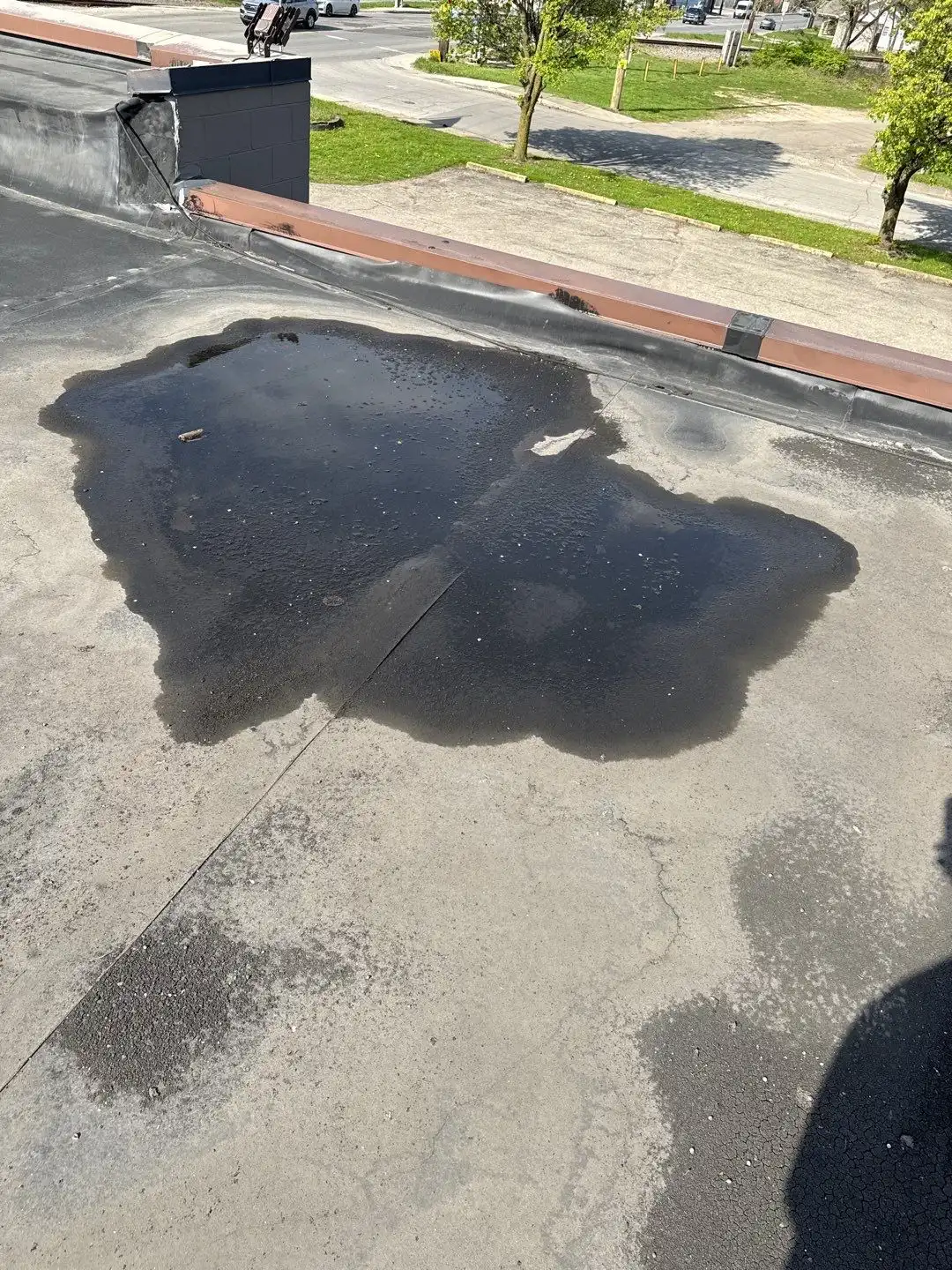
Seam failure is by far the most common issue we see. Older EPDM was installed with a contact adhesive that becomes brittle over time, and the lap edges start to curl. Newer factory taped seams hold up better, but they are still vulnerable where someone has walked across a corner repeatedly or where a satellite dish was bolted through the membrane without proper flashing. Pipe boots are next on the list. The rubber boot around a plumbing vent has a much thinner cross section than the main membrane and degrades faster from sun exposure. We often find cracks running around the base of a boot that has otherwise looked fine from the ground. Ponding water is the slower killer. Broad Ripple buildings with slight deck sagging or undersized drains end up with persistent puddles, and that standing water accelerates membrane breakdown and stains the rubber a chalky gray.
The other failure point worth naming is mechanical damage from rooftop trades. HVAC technicians dropping tools, refrigerant line sets dragged across the membrane, holiday lighting crews running extension cords over sharp edges, and even the occasional dropped screw left to work its way into the rubber under foot traffic all show up in our inspection reports. We have walked roofs in Broad Ripple where the only real failure was a single half inch puncture under a condenser pad, and a building owner had been mopping up water for two years not knowing the cause. Hail is another factor specific to Central Indiana storm seasons. EPDM handles small hail reasonably well, but anything above an inch can bruise the membrane in ways that do not leak immediately but show up six months later as the damaged spot weathers through.
What a Real EPDM Repair Looks Like
When you call us about a rubber roof leak, the first thing we do is assess severity over the phone. If water is actively entering the building, we prioritize getting a crew out to dry in the area, which usually means a temporary patch or tarping over the suspect zone so your interior stops taking damage while we schedule the full inspection. For an active interior leak, the inside cleanup matters as much as the roof work, and we coordinate that side too. If you are dealing with ceiling stains, sagging tiles, or wet insulation above an office space, our team handles the ceiling water damage and leak repair in the same visit so you are not juggling two contractors.
The actual repair starts with finding where water is entering, which is rarely directly above where it is showing up inside. Water travels along the underside of the membrane, along purlins, along electrical conduit, until it finds a seam in the deck or a ceiling penetration. We use moisture mapping and infrared to trace the saturated insulation back to the entry point, a process covered in more detail in our guide on roof leak origin detection. Once we have the source, the repair itself is straightforward in most cases. Clean the membrane with EPDM primer, apply a cover strip or uncured flashing over the failed seam or puncture, roll it in, and seal the edges with lap sealant. Pipe boots get replaced with a new molded boot or a field fabricated wrap. Drains get re flashed. A typical small repair takes a crew a few hours.
Material choice on the repair matters more than people realize. We carry cured cover tape for clean seam work and uncured flashing for irregular shapes around curbs and corners, because trying to force cured tape around a complex penetration leaves bridging gaps that fail within a season. Surface prep is the other place corners get cut by less experienced crews. EPDM has to be scrubbed with a dedicated cleaner, primed, and given proper flash off time before any tape goes down. Skipping that step is why so many of the patches we tear off were installed by someone else within the last three or four years. Broad Ripple Commercial Roofing documents every repair with photos before, during, and after, and we leave that record with the building owner so the next inspection has a baseline to work from.
Pricing depends on access, scope, and how much wet insulation has to come out before the patch goes down. A single isolated seam repair on an accessible roof typically runs three hundred to seven hundred dollars in Broad Ripple. A pipe boot replacement falls in a similar range. When we have to cut out saturated insulation and replace a section of deck before re flashing, costs climb into the low thousands quickly. Here is roughly how the common scenarios shake out.
When Patching Stops Making Sense
There is a point where chasing leaks on an old EPDM roof costs more than addressing the membrane as a whole. If your roof is past twenty years old, has multiple failed seams, and shows widespread chalking or shrinkage where the rubber is pulling away from parapet walls, we will tell you that directly rather than sell you another round of patches. The honest call is often a fluid applied coating or a tear off and replacement, and the math depends on how much wet insulation we find during the inspection. A coating can extend a tired but structurally sound roof another ten to fifteen years. A replacement makes more sense when the deck or insulation is compromised. We walk through that decision in our piece on when to coat versus replace a commercial roof, but the short version is that we run the numbers with you before recommending either path. If we cannot help, or if the right answer is to call someone else, we will tell you that too.